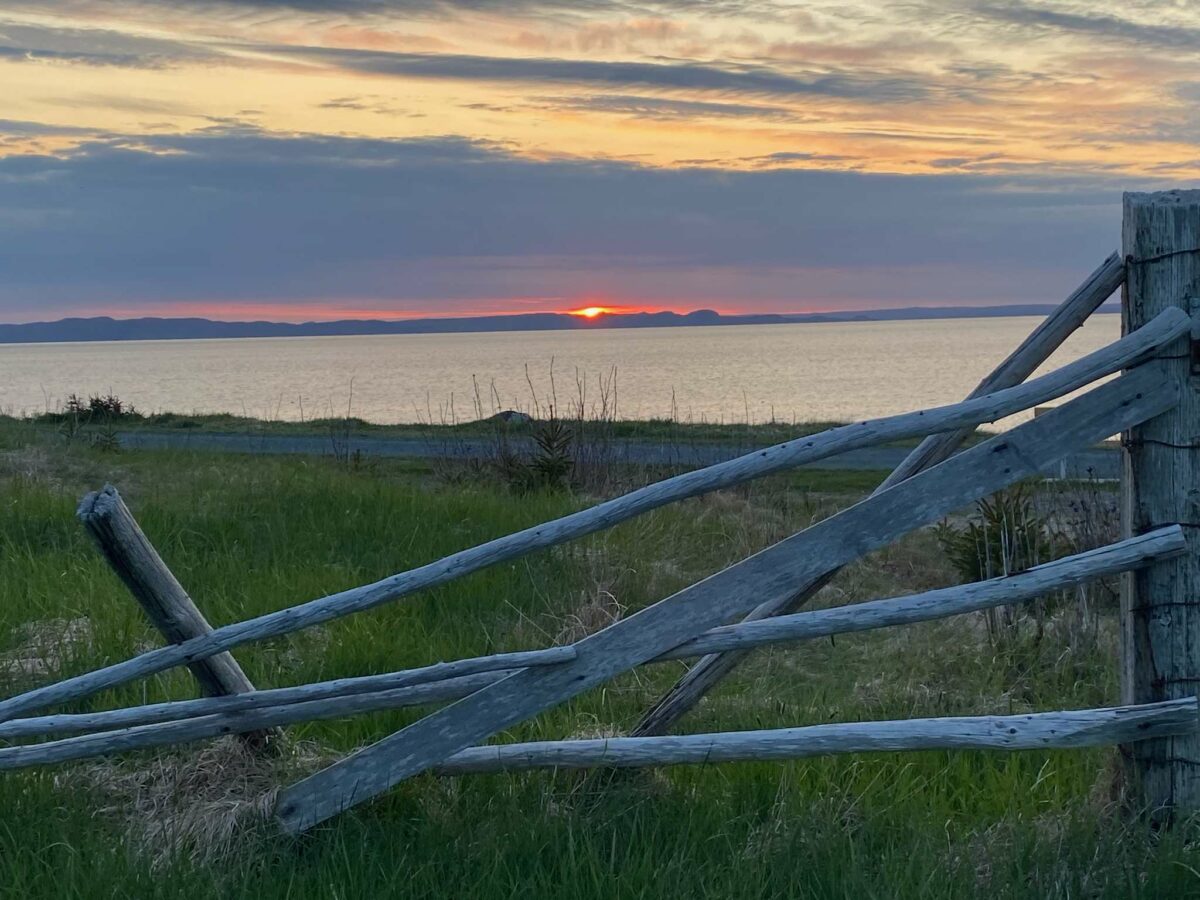
Newfoundland and Labrador sits at the far eastern edge of Canada, and it is easy to put off. The flights take planning, the distances are long, and the weather does what it likes. The reasons to visit Newfoundland and Labrador are worth the effort, though, and they are specific: the evening light, the cold Atlantic, a plate of baked beans, and towns where a stranger gets a conversation.
This article goes through those reasons one at a time. Each comes with something you can do, and each points to a matching post on sitesnl.com for the details.
The sunsets that make people stay out past dinner
On the coast, the best light of the day arrives after most visitors have gone indoors to eat. The sun drops toward the water or behind a headland, and the sky goes through a long run of colour before it is dark. Plan for this, because the people who book a late table and skip the sunset miss the best part of the day.
Here is how to use it:
- Choose lodging near the water or near a lookout so you can walk to the view rather than drive in the dark.
- Eat early or eat late, but do not schedule dinner across the sunset.
- Bring a warm layer even on a mild day, since the temperature falls quickly once the sun is down.
- Leave a gap in the evening plan. Sunsets here are not on a timetable, and cloud or fog can change what you get from one night to the next.
If you take photographs, shoot from the shore facing the sky and again after the sun has gone. The colour often lasts longer than people expect, and the best frames can come after the crowd has left.
There is a sitesnl.com post on the sunsets that goes into where to watch and how to plan an evening around them. Read it before you pick where to sleep.
Water that is colder and wilder than you expect
The North Atlantic here is cold, and it stays cold. Visitors who picture a beach holiday should adjust their expectations. The water is for looking at, for boat trips, and for the coastline it carves, more than for a casual swim.
The water is also home to sharks. That is a fact about the ocean, and it is no reason to cancel a trip. It is a reason to respect the sea and to treat the coast as a wild place rather than a managed one.
A few practical points follow from that:
- Take a boat tour with a local operator if you want to be on the water. They know the conditions and carry the safety gear.
- Wear a life jacket on any boat if one is offered, and listen to the safety briefing.
- Stay back from wet rock at the edge of the shore. Waves can reach higher than they look from a distance.
- Ask a local before you wade or swim anywhere. Cold water can shock the body quickly, and conditions vary from cove to cove.
The sharks are one more reason the coast feels alive rather than decorative. Knowing they are out there changes how you look at the water, and most visitors find that more interesting than frightening. The matching post on sitesnl.com covers the cold water and the sharks in more detail, so read it before you plan any time on the sea.
What visitors say after they go, and the tips locals would add
Visitors tend to talk about the same few things when they come home: the scenery, the food, and how friendly people were. The scenery is easy to believe from photographs. The friendliness is harder to convey, which is part of why it is worth experiencing for yourself.
Here are the tips a local would add, based on how the province works.
Give yourself more time than the map suggests. Distances are large, roads can be slow, and the best stops are often unplanned. A trip that tries to cover everything ends up spent in the car.
Expect the weather to change. Fog, wind, rain and sun can all turn up in the same day. Pack layers and a waterproof jacket, and keep your plans flexible enough to swap a coastal day for an indoor one.
Book ahead for busy periods. Summer is when many visitors arrive, and accommodation and ferry or tour spaces can fill. Reserve the things you care most about early.
Talk to people. Ask a shopkeeper, a bartender or a boat captain what you should see. The answers are often better than a guidebook’s, and the conversation is part of the visit.
Slow down on the road. Wildlife can be on or near the roads, particularly around dusk. Drive more carefully in the evening, which is also when you will be heading out to watch the sunset.
The sitesnl.com post on visitor impressions and local tips gathers more of this advice. It makes a good second read once you have decided to go.
Baked beans and the table you will be invited to
Newfoundland baked beans are a plate of slow-cooked beans in a sweet and savoury sauce, and they are a real part of how people here eat. They are home cooking. You are more likely to find them on a kitchen table or on a menu that values tradition than in a fancy dining room.
That is the point of including them as one of the reasons to visit. Food here is tied to where you are and who you are eating with. A plate of beans can be a meal, and it can also be the start of a conversation about whose recipe is best.
To make the most of it:
- Order the traditional dishes when you see them on a menu, and ask the server what is typically served alongside.
- Try more than one version. Cooks have strong opinions, and no two pots are quite the same.
- Accept an invitation to a meal if you are offered one. Hospitality is a normal part of life here, and saying yes is the easiest way to see how people live.
- Visit a local bakery or small restaurant rather than only the places aimed at travellers.
The sitesnl.com post on Newfoundland baked beans explains the dish and what to look for on the plate. If food is what draws you to a place, start there.
Small towns where people still talk to you
Much of the province is made up of small communities, many of them on the water. They are quiet, and you can walk through most of them in a short time. What you get in return is attention: people notice a visitor, say hello, and often ask where you are from and how you are finding things.
That friendliness is one of the strongest reasons to choose Newfoundland and Labrador over a destination where you would be one face among thousands. It changes the trip. You are a guest, and you are treated that way.
Here is how to put it to use:
- Stay in a small town for at least a couple of nights instead of moving every day.
- Walk the harbour or main street without a fixed plan and see who you meet.
- Shop at local stores and eat at local places. It supports the community and gives you more to talk about.
- Ask questions. People are usually glad to explain their town, their work and their favourite view.
You will come away with better stories than a checklist of sights would give you. Remember to be a considerate guest: respect private property, take your litter with you, and keep your voice down in places where people live.
How to start planning: when to go, how to get around, what to read next
Start with the season, because it shapes everything else. Summer is the easiest time for travel, with the most services running and the best chance of good weather for the coast. Other seasons can offer quieter roads and a different feel, but check what is open before you commit, since some tours and businesses run only for part of the year.
Next, decide how you will get around. The province is large and public transport will not take you everywhere you want to go, so most visitors rent a car. Build in extra time for driving, and plan overnight stops at a sensible interval rather than aiming for long days at the wheel. If you want to reach Labrador, look into the ferry and flight options early, as these need more advance planning than a drive to the next town.
Then choose your focus. You do not need to see everything on a first visit. Pick the reason that pulls you most:
- Sunsets and scenery: choose a coastal base and keep your evenings free.
- Cold water and wildlife: book a boat trip and learn the safety basics.
- Local food: plan your route around places to eat, and look for the baked beans.
- Small towns and people: stay longer in fewer places.
Once you have picked, read the matching post on sitesnl.com. Each one is written to help you turn a reason into a plan, and together they cover most of what a first-time visitor needs to know.
Pick one place from this list, then read the matching post on sitesnl.com and start sketching your trip.